
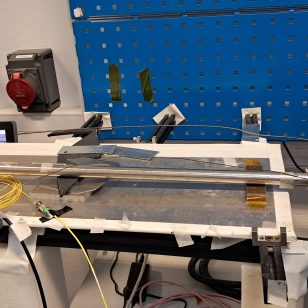
The work carried out by CEA-List enables ultrasonic wave measurements to be taken using a Bragg grating at temperatures exceeding 1000°C.
Read more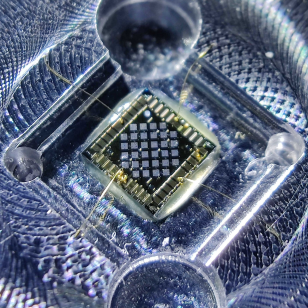
Neutrinos, which are virtually undetectable particles, have been studied by the BeEST collaboration using ultra-sensitive quantum sensors, measuring for the first time the size of their wave packet at the moment of their creation.
Read more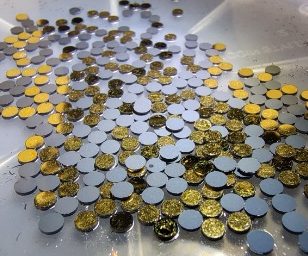
CEA-List is pioneering a new approach using diamond, an exceptional material whose remarkable electrochemical properties are being harnessed to detect the presence of nitrites in urine as part of the early diagnosis of urinary tract infections.
Read more
Electromagnetic methods are particularly well suited to the monitoring of metallic materials due to their sensitivity to microstructural changes.
Read more
CEA-List drew on more than three decades of experience with active non-destructive nuclear measurement to develop two groundbreaking methods to improve the detection of nuclear material and of drugs.
Read more
CEA-List has developed a new formal framework that ensures all reads are detected, even if interrupted, whilst safeguarding the confidentiality of audit trails from prying eyes.
Read more
Using detailed simulations built into our MAX multi-agent tool, we conduct practical assessments of the impact of attacks on security, complementing more traditional theoretical analyses.
Read more
Fuzzing, symbolic execution and abstract interpretation, amongst other techniques, enable us to uncover bugs in our programmes at an unprecedented rate. But this raises the question: what should we do with all these bugs?
Read more
Interested in leading your research program? You want to develop useful technologies and provide a concrete response to the major technological challenges facing society? Secure the AI Rising Talents Fellowship and turn your ideas into action!
Read more
Our RaGNNaR demo demonstrates how GNNs effectively process radar data for gesture recognition using standard off-the-shelf sensors.
Read more