

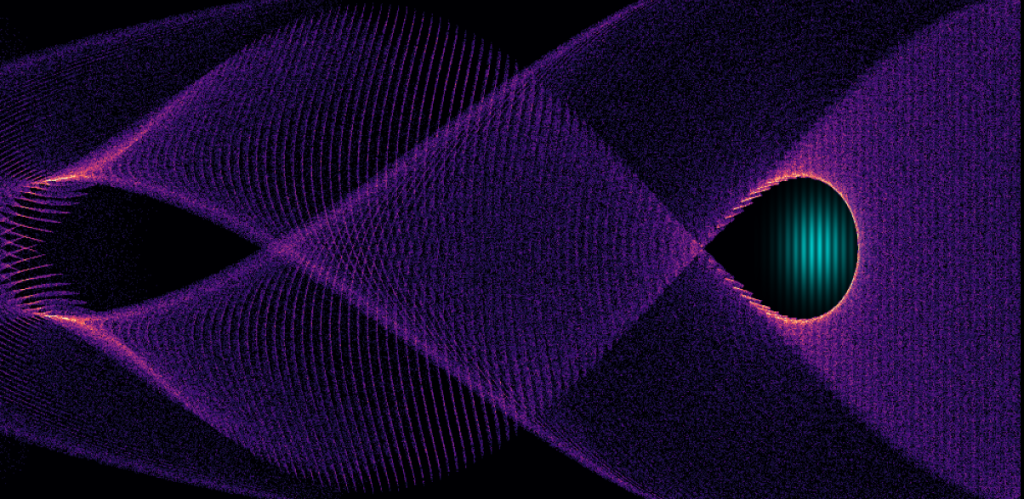
CEA-List researchers are currently developing two major innovations in active non-destructive nuclear measurement methods to fight the trafficking of hazardous materials and illicit substances. The first combines a linear electron accelerator (linac), photoneutron spectrometry, and artificial intelligence to identify light elements characteristic of explosives and narcotics. The second, developed for the EU MULTISCAN 3D project with Munich’s LMU[1]-CALA[2], is laying the foundations for a breakthrough in nuclear material detection technology.
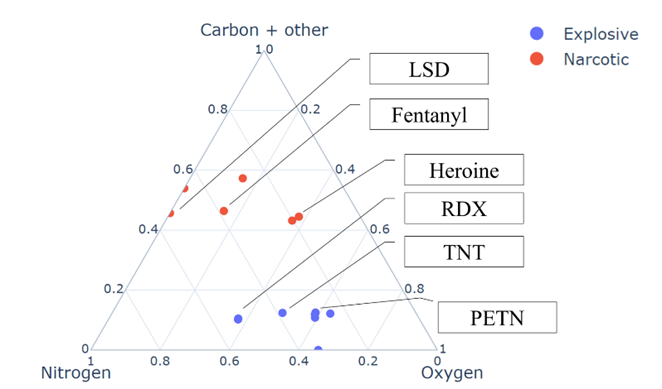
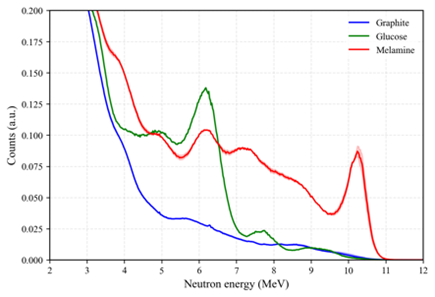
The method developed to detect illicit substances is based on a linac that generates a braking radiation capable of inducing photonuclear reactions. Liquid scintillators are used to detect the neutrons emitted, whose spectra contain the signatures of the elements (carbon, nitrogen, oxygen) present. An intense burst of photons allows the neutrons of interest to be identified. The spectra, despite their rich structures, are often distorted by the geometry of objects inspected and the detector’s response, a challenge that is effectively addressed by automated analysis. The DeepNSI deep learning model, based on convolutional neural networks trained by Monte Carlo simulation, is able to identify elements even at very low concentrations (less than 4% for nitrogen). Other algorithms, like Nonnegative Elastic Net, can also be used to estimate the relative concentrations of the different elements present. The resulting chemical identification is advanced, robust, and fast enough to meet the requirements of freight inspection.
CEA-List also reported a world-first experimental demonstration of photofission on impoverished uranium using a totally new photon source, marking a major advance in the development of tools to fight the illegal trafficking of nuclear material. The photon source developed is based on Inverse Compton Scattering (ICS): A femtosecond laser beam accelerates high-energy electrons in a plasma, producing photons of sufficient energy to initiate photofission. This is the first time this type of photon source has been used in place of a traditional linac. The laser’s quasi-mono energy, integrability, and scalability clear a major new path toward the future deployment of active nuclear measurement to detect actinides in shipping containers.
While these two advances focus on the detection of different targets (drugs and nuclear material), both are a testament to the emergence of disruptive, more sensitive, and smarter technologies capable of making Europe’s ports much more secure.
[1] LMU : Ludwig-Maximilians-Universität München
[2] CALA : Centre for Advanced Laser Applications
AI analyzes distorted photoneutron spectra and extracts the elementary signatures that cannot be isolated by spectrometry alone.

Our advance using a laser-based ICS source marks a major step toward the development of advanced technologies for the detection of nuclear material.

According to the European Drug Report 2024, nearly 70% of seizures made by EU customs officials take place in ports, mainly in maritime containers.