

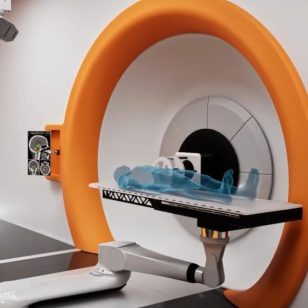
One year after its launch, the FRATHEA radiotherapy project (Flash RAdiation THerapy Electron Acceleration), supported by Institut Curie in collaboration with the CEA, is taking a major new step: Thales has been selected as a partner in charge of building and installing a very high energy electron irradiator (VHEE) on the Orsay site of Institut Curie.
Read more
Papyrus, the open-source model-based systems engineering platform, is now available as a web application.
Read more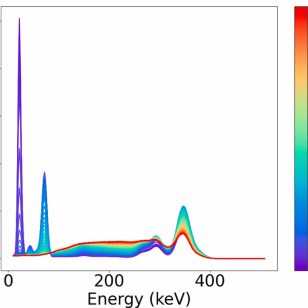
In gamma spectrometry, the demand for automated algorithms for rapid decision-making in low-statistics in situ measurements is high.
Read more
The CEA pioneered 2.5D and 3D integration with its IntAct circuit and has held on to its position as a leader in 3D integration ever since. Recent research by two CEA-List PhD students has led to significant advances in communications and security.
Read more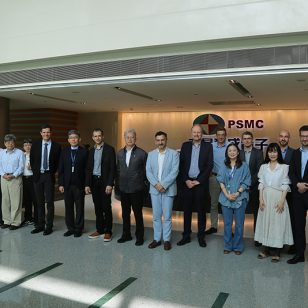
CEA-Leti, a world-leading micro & nanotechnologies research institute, and CEA-List, a specialist in smart digital systems, announced a strategic collaboration with Powerchip Semiconductor Manufacturing Corporation (PSMC).
Read more
Digital Twins, which are built on complex and heterogeneous technologies, are becoming more widely used. The purpose of this research was to come up with a qualitative methodology for assessing the economic and environmental costs associated with Digital Twins.
Read more
CEA-List used its Papyrus4Manufacturing modeling platform to design a new software architecture to provide the flexibility and automation needed to make ondemand production a reality.
Read more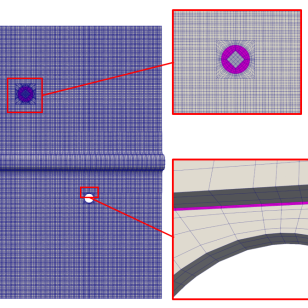
For the simulation of viscoelastic wave propagation, conventional explicit schemes like those used in our CIVA non-destructive testing simulation software become impractical in the presence of localized contrasts or fine meshes emanating from complex geometries.
Read more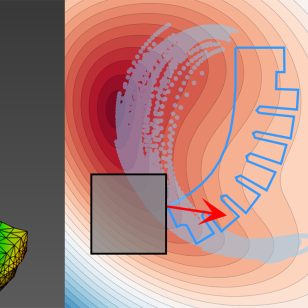
LEBNN, developed by CEA-List, is a neural network architecture for the mechanics of statically hyperelastic structures.
Read more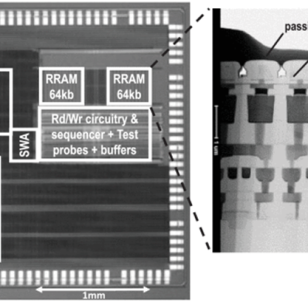
The CEA has been conducting R&D on resistive memory (ReRAM)— an alternative to flash memory—for more than a decade. A complete system integrating ReRAM into a processor architecture was recently designed and validated for advanced memory company Weebit Nano.
Read more