

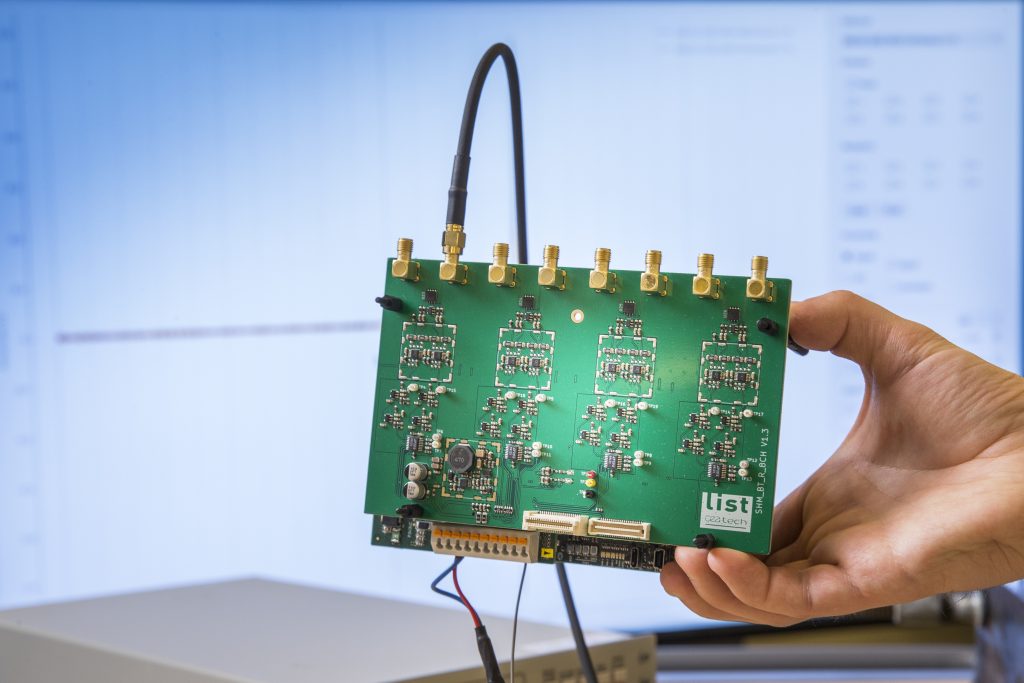
Smart acquisition systems are the way of the future. However, what these systems will look like will depend on the use case. For non-destructive testing, for example, the purpose of these systems is to guide inspection and provide decision-assistance to support human operators. In structural health monitoring, sensors generate a continuous and very large stream of data. The automated in-sensor analysis of this data would limit the amount of data exchanged-overcoming a major challenge. At CEA-List, we possess broad, deep knowledge of the hardware used in acquisition systems and have the capacity to integrate AI models and processing directly into sensors. For example, our Aidge framework was developed to manipulate, convert, and optimize neural networks for Edge devices, while our GERONIMO acquisition system for guided-wave measurement enables the deployment of end-to-end solutions, from sensor to diagnosis. CEA-List has developed two proof-of-concept prototypes that illustrate these capabilities. Smart acquisition systems are the way of the future. However, what these systems will look like will depend on the use case. For non-destructive testing, for example, the purpose of these systems is to guide inspection and provide decision-assistance to support human operators. In structural health monitoring, sensors generate a continuous and very large stream of data. The automated in-sensor analysis of this data would limit the amount of data exchanged-overcoming a major challenge. At CEA-List, we possess broad, deep knowledge of the hardware used in acquisition systems and have the capacity to integrate AI models and processing directly into sensors. For example, our Aidge framework was developed to manipulate, convert, and optimize neural networks for Edge devices, while our GERONIMO acquisition system for guided-wave measurement enables the deployment of end-to-end solutions, from sensor to diagnosis. CEA-List has developed two proof-of-concept prototypes that illustrate these capabilities.
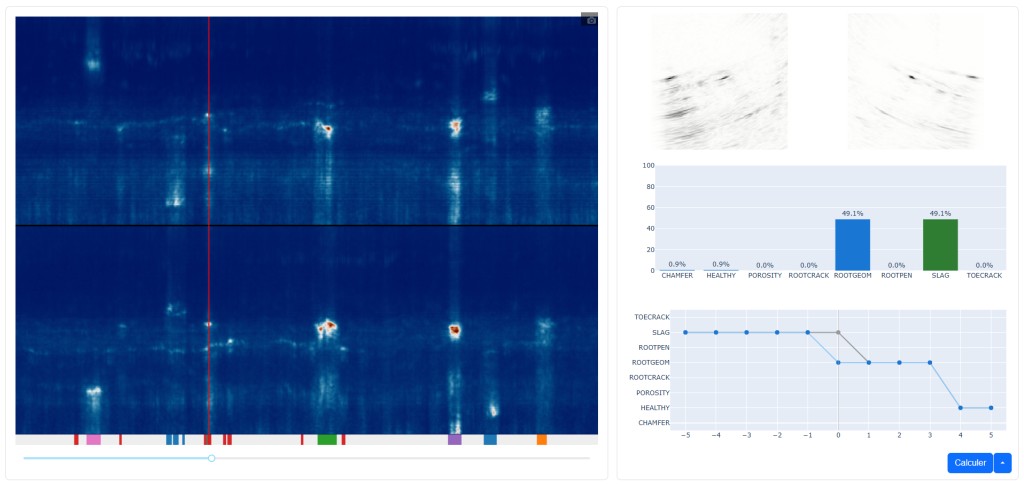
First, a ConvNeXt-type model, reduced for constrained hardware environments, was implemented on TFM image analysis for ultrasonic weld inspection[1]. The model, trained on experimental data, classifies images with no false negatives—a non-negotiable in industrial environments— and identifies 87% of healthy data under nominal inspection conditions. To ensure the model is robust, we modified the inspection conditions by moving the probes during inspection and by changing the geometry (pipes, plates, variations in thickness) of the structure inspected. We used Aidge to optimize the model, which was then efficiently deployed on a NXP i.MX8 architecture (Figure 1), the foundation of our different acquisition systems.
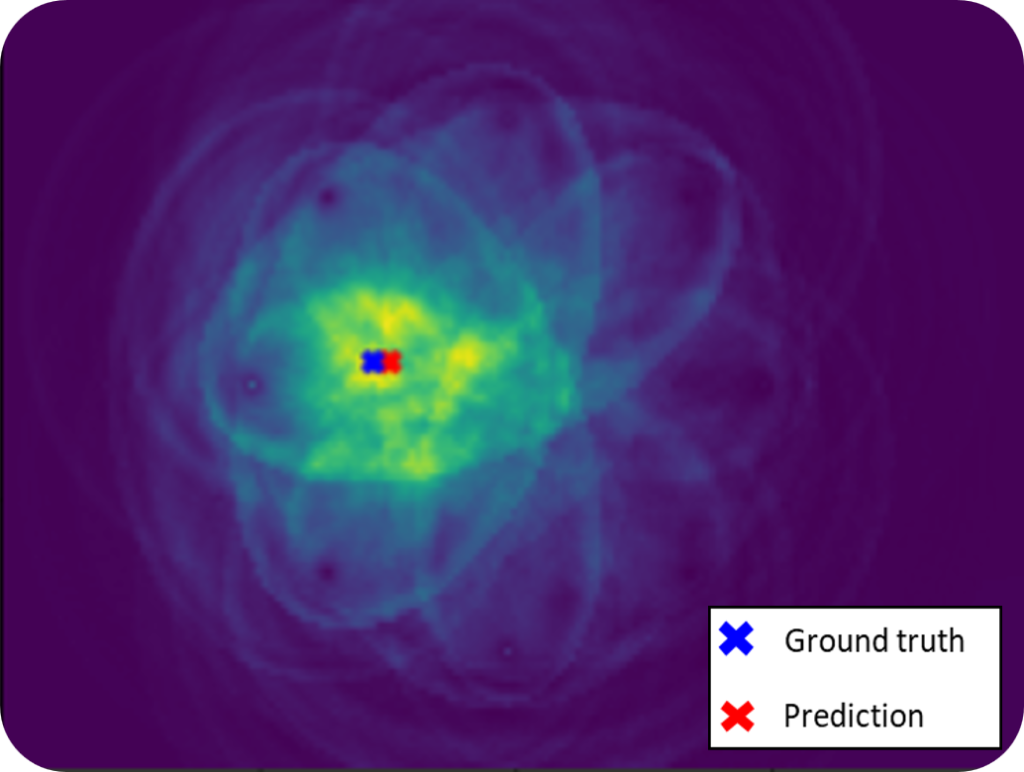
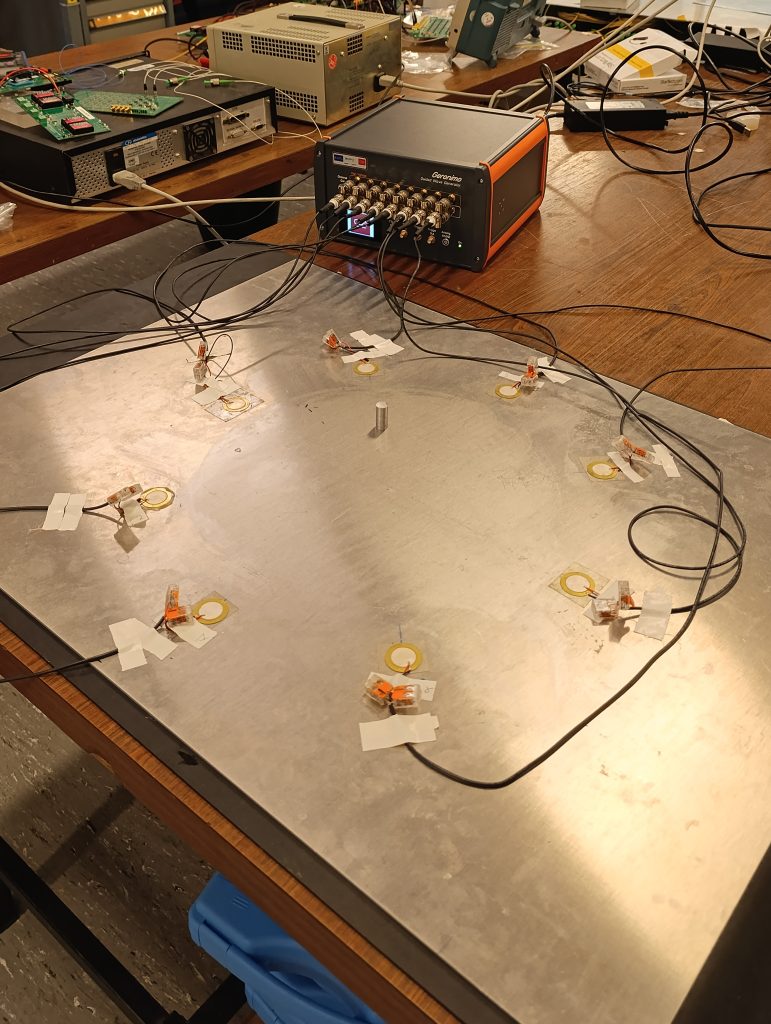
Embedded data compression: up to 10,000x less data (3 floating values instead of several kB of data)
Embedded guided-wave analysis transforms measurement data into clear indicators of the structure’s condition, enabling continuous monitoring.