

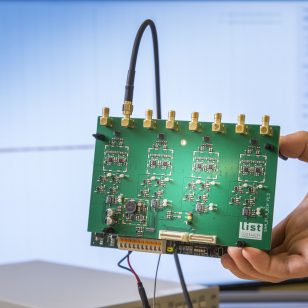
Advances in Edge computing and AI have made integrating analysis capabilities directly into acquisition systems a reality.
Read more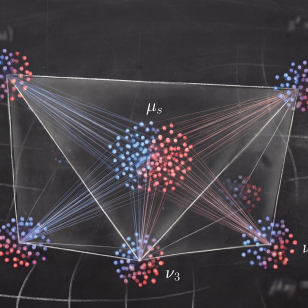
CEA-List developed De-FedDaDiL, a fully distributed method for multi-source domain adaptation (MSDA).
Read more
CEA-List developed federated learning algorithms to predict charging station occupancy in real time without sharing sensitive user data.
Read more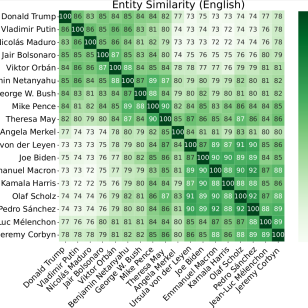
CEA-List developed a new method for measuring political bias in large language models.
Read more
The formal verification of neural networks presents many challenges. Although there are languages to describe how a neural network is expected to behave, current validation tools do not consider the full richness of these languages. CEA-List is investigating practices from the field of programming languages to expand the scope of what can be formally verified.
Read more
We developed a method, PEM, to adapt the Monte Carlo algorithm and penalize regions that are uncertain for the AI, mitigating AI errors and making deep-learning-based materials modeling trustworthy.
Read more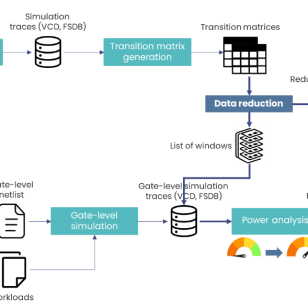
In this research, we proposed an AI-assisted methodology to significantly speed up power consumption modeling. Clustering techniques are used to select representative windows, automatically reducing register transfer level (RTL) traces.
Read more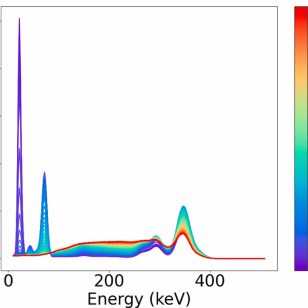
Read more