


Digital Twins, which are built on complex and heterogeneous technologies, are becoming more widely used. The purpose of this research was to come up with a qualitative methodology for assessing the economic and environmental costs associated with Digital Twins.
Read more
CEA-List used its Papyrus4Manufacturing modeling platform to design a new software architecture to provide the flexibility and automation needed to make ondemand production a reality.
Read more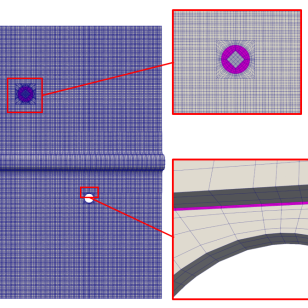
For the simulation of viscoelastic wave propagation, conventional explicit schemes like those used in our CIVA non-destructive testing simulation software become impractical in the presence of localized contrasts or fine meshes emanating from complex geometries.
Read more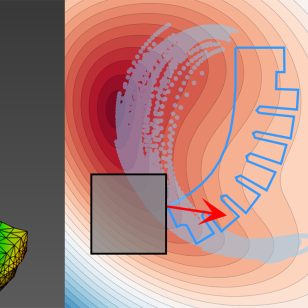
LEBNN, developed by CEA-List, is a neural network architecture for the mechanics of statically hyperelastic structures.
Read more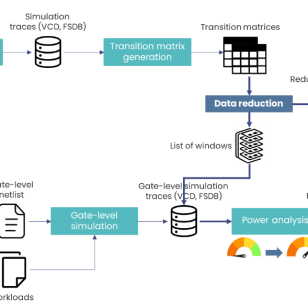
In this research, we proposed an AI-assisted methodology to significantly speed up power consumption modeling. Clustering techniques are used to select representative windows, automatically reducing register transfer level (RTL) traces.
Read more
CEA-List possesses a formal methods-based toolkit that can help cybersecurity experts pinpoint vulnerabilities in software and prove that software protects data privacy and integrity—something that is required for the highest levels of software security certification.
Read more
CEA-List is working with RTE on the design of the power grid infrastructure operator’s future power grid control system.
Read more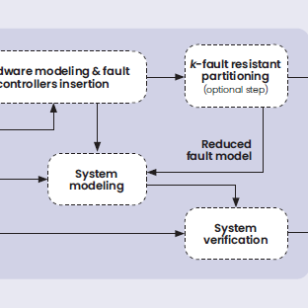
Fault injection attacks threaten the security of digital systems. CEA-List and Graz Technical University (Austria) developed a new pre-silicon analysis method that led to the world’s first demonstration of the robustness of a processor and its boot code against these attacks.
Read more