

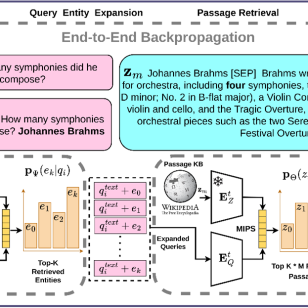
CEA-List developed the MiRAG model for visual question answering about named entities. This is the first time a retrieval augmented generation (RAG)-based approach to generative AI has been applied to this task.
Read more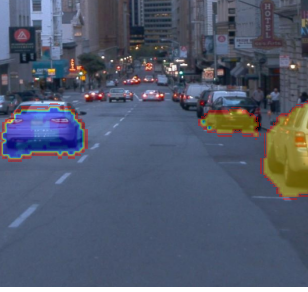
xMOD combines 2D vision (cameras) and 3D vision (LiDAR sensors) in a novel cross-distillation method. The AI learns to segment its environment from motion cues in the images, delivering beyond state-of-the-art performance.
Read more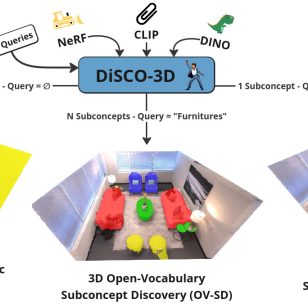
The DiSCO-3D semantic segmentation method is used to discover, in a 3D scene, the elements corresponding to the semantic subconcepts of a user query expressed in natural language.
Read more
Understanding unknown environments in a way that allows them to operate within strict safety constraints remains a challenge for robots. And that is the challenge our teams have taken on in the Magicoders project, combining the strengths of symbolic AI and generative AI in a new approach.
Read more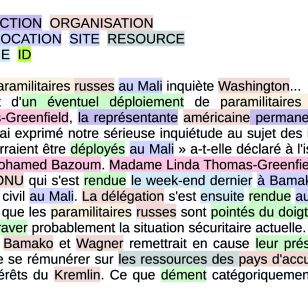
CEA won the EvalLLM 2024 challenge, organized by the French Ministerial Agency for AI and Defense (AMIAD) in May 2024.
Read more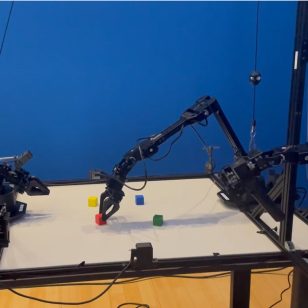
CEA-List’s smart robotics demonstrator highlights generative AI’s potential as an enabler of robotic tasks whose instructions are given in natural language.
Read more
At the request of cybersecurity firm Vade, CEA-List engineered a first line of defense to new cyberattack vectors: AI-generated text detection.
Read more
To create trusted generative AI solutions, Thales’s AI Lab, the most powerful integrated laboratory for critical AI in Europe, and the CEA, which is one of the world’s most innovative research organisations and is listed alongside Thales in the Clarivate Analytics Top 100 Global Innovators, have joined forces to focus on a range of generative AI use cases, in particular for intelligence and command applications.
Read more