


The CEA pioneered 2.5D and 3D integration with its IntAct circuit and has held on to its position as a leader in 3D integration ever since. Recent research by two CEA-List PhD students has led to significant advances in communications and security.
Read more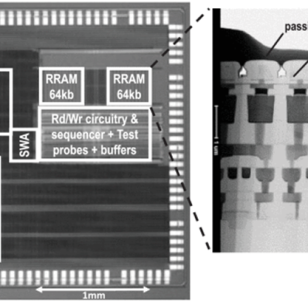
The CEA has been conducting R&D on resistive memory (ReRAM)— an alternative to flash memory—for more than a decade. A complete system integrating ReRAM into a processor architecture was recently designed and validated for advanced memory company Weebit Nano.
Read more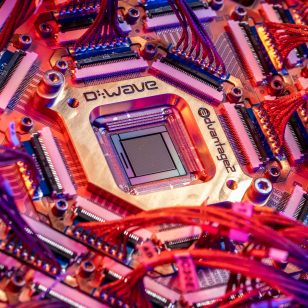
Much like classical application-specific processors, quantum processing units (QPUs) are expected to be used to speed up certain computational steps in algorithm execution.
Read more
Advances in quantum computing are creating new challenges to our current code validation practices. CEA-List is developing new formal-analysis-based verification techniques to respond to this new context.
Read more
CEA-List has developed a new formal framework that ensures all reads are detected, even if interrupted, whilst safeguarding the confidentiality of audit trails from prying eyes.
Read more
Using detailed simulations built into our MAX multi-agent tool, we conduct practical assessments of the impact of attacks on security, complementing more traditional theoretical analyses.
Read more