

Share

Fiber Bragg gratings for ultrasonic measurement at high temperatures

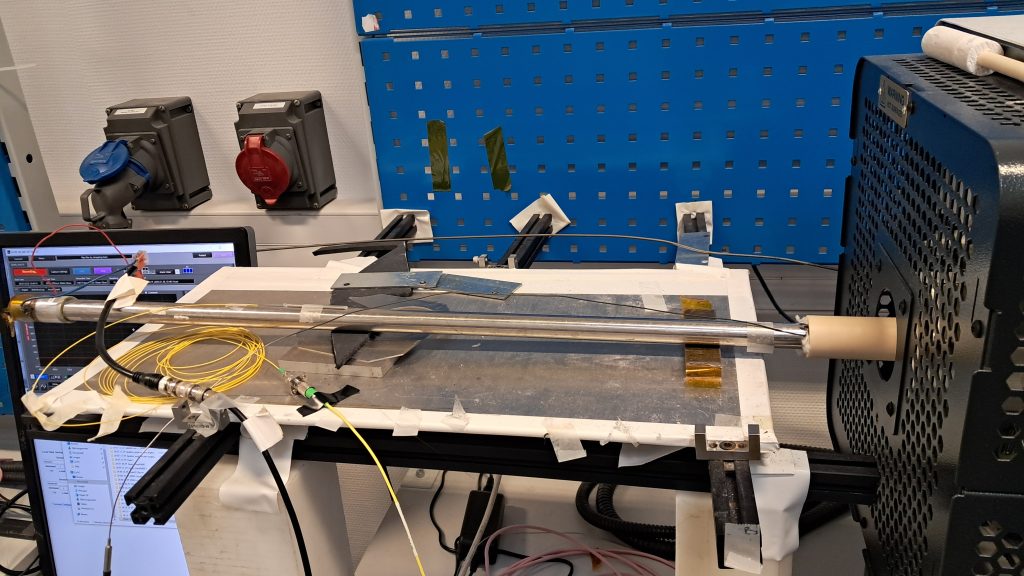
High-temperature Bragg grating measurement experiment. The metal rod and optical fiber are inserted into the furnace on the right, and a piezoelectric transducer, on the left, emits ultrasound into the rod. Crédit : CEA
High temperatures are one of the major technological
barriers to the deployment of monitoring systems in severe
environments. In this research, we demonstrated the firstever use of fiber Bragg gratings to measure ultrasonic waves at temperatures above 1,000 °C.

Structural health monitoring (SHM) entails acquiring data from the structure being monitored during use. The methods used in SHM have the capacity to provide precise information on the condition of a structure, making maintenance more efficient. The instruments used to collect data must be able to do so without disrupting operations. They must also be able to withstand the rigors of the structure’s operating environment. To address these challenges, CEA-List is developing guided-ultrasonic-wave-based systems. In these systems, waves highly sensitive to disturbances in the structure being monitored are propagated over long distances. Our approach is to use fiber Bragg grating sensors to measure the waves. Due
to the small fiber diameter, this solution does not disrupt normal use of the structure. In addition, the sensors can withstand harsh conditions like extreme temperatures, ionizing environments, and strong electromagnetic fields.

Fiber Bragg grating sensors also offer the advantage of being very sensitive to temperature changes and to strain. Compared to the standard measurements taken with this type of sensor, the ultrasonic waves used in our approach are characterized by small, high-frequency deformations,
which require a specific interrogation technique called edge filtering. We developed a sensor interrogator capable of measuring ultrasonic waves despite variations—wider amplitude and lower frequency—due to changes in environmental and operating conditions. The system was used for a measurement campaign at the Andra Underground Research Laboratory in Bure, France.
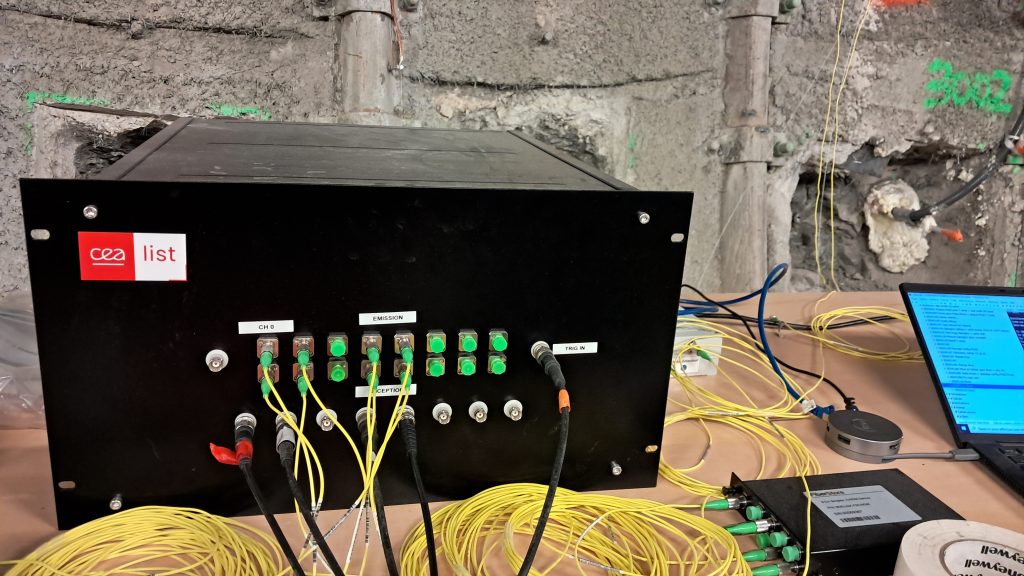
Figure 1 : Optogéro measurement system deployed at Bure. Crédit : CEA

In one experiment, a sensor was mounted on a metal rod inside a furnace to test the system’s measurement capabilities in severe environments. The rod was heated to over 1,000 °C. An ultrasonic source, incapable of withstanding such high temperatures, was attached to the end of the
rod extending outside the furnace. Ultrasonic signals were effectively measured using the sensors, a first at such high temperatures. This experiment demonstrated the feasibility of using guided-ultrasonic-wave-based monitoring systems in severe environments.

The research, which is ongoing, is now focusing on improving the measurement and, specifically, the system’s ability to interrogate a  larger number of sensors (currently limited to seven) on the same fiber simultaneously.
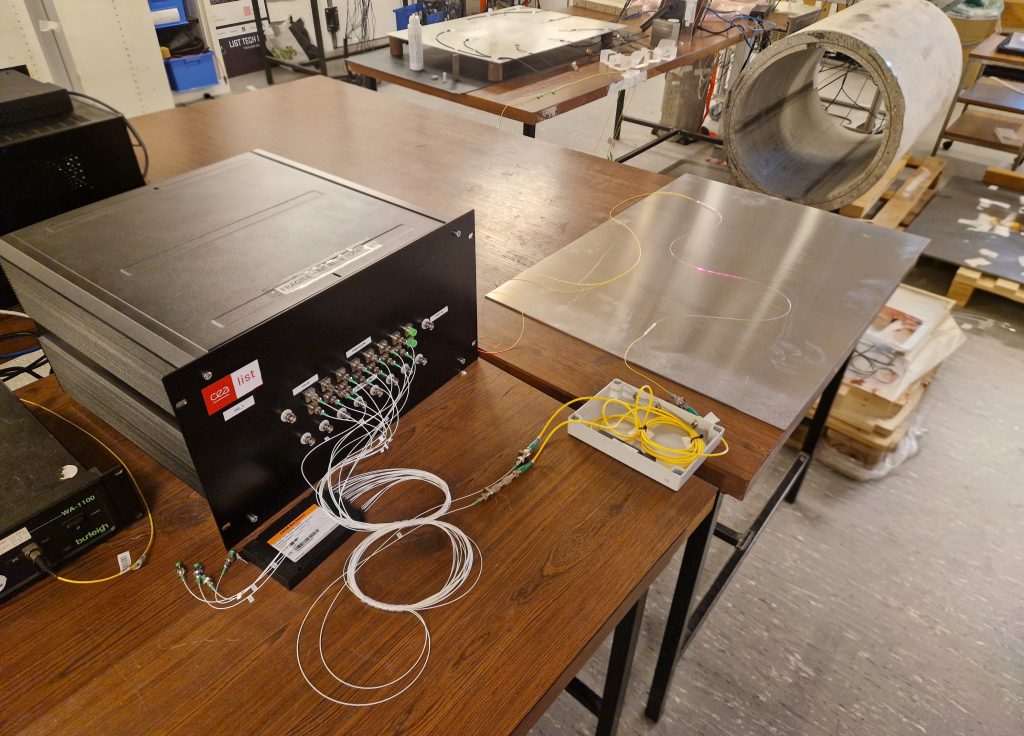
Figure 2 : Optical fiber for integration into a system. Crédit : CEA

Key figure

1000°C

Guided-ultrasonic-wave measurement at temperatures above 1,000 °C

Fiber optic sensors enable non-intrusive monitoring in severe environments.»

Rebecca Cabean

Arnaud Recoquillay

Research Engineer and Expert — CEA-List

Find out more

Application

  • High-temperature monitoring (furnaces, aeronautics, nuclear, etc.)

Project

  • Euratom FIND

Flagship publications

  • « Ultrasonic Guided Waves Measurements using Bragg Gratings in Optical Fibers under Varying Environmental Conditions ». A. RECOQUILLAY, N. ROUSSEL, L. MAURIN, et al. In: 50th Annual Review of Progress in Quantitative Non Destructive Evaluation. American Society of Mechanical Engineers, 2023. p. V001T09A009. https://doi.org/10.1115/QNDE2023-118544
  • « Ultrasonic waves detection above 1000 degree Celsius with Fiber Bragg Grating sensors ». A. GALLET, A.RECOQUILLAY, N. ROUSSEL, et al. In : 2025 IEEE Sensors Applications Symposium (SAS). IEEE, 2025. p. 1-5. https://doi.org/10.1109/SAS65169.2025.11105178

People contributed to this article

  • Antoine Gallet, Research Engineer, CEA-List
  • Arnaud Recoquillay, Research Engineer and Expert