

Biological testing laboratories and hospitals commonly test for nitrites to help diagnose urinary-tract infections (UTIs). When a sample tests positive for nitrites, it could mean that a Gram-negative bacterium—most often Escherichia coli, responsible for 75% to 95% of UTIs—is the culprit. Nitrites show up in urine when endogenous nitrates are converted into nitrites, indirectly indicating an infection caused by these types of bacteria. The most used rapid- nitrite-testing method involves Greiss-reaction-based test strips that change color due to the interaction of nitrites with Greiss reagent. This testing method is fast, inexpensive, and doesn’t require any specialized knowledge. However, the interpretation of the results can be subjective, and the test’s sensitivity is relatively limited (to around 10 μM in practice). Plus, it doesn’t provide an indication of the actual concentration of nitrites present in the sample.
CEA-List has been working to develop an alternative nitrite-testing method with Usense, a France-based startup developing a connected wearable medical device that accurately and instantaneously measures several biomarkers in urine.
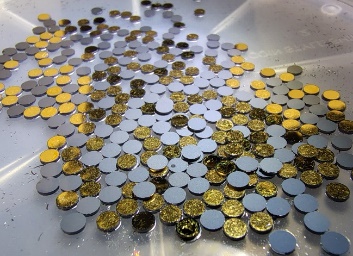
The partnership resulted in an analytical method using boron-doped diamond electrodes to electrochemically detect nitrites in urine. The remarkable properties of the boron-doped diamond electrodes fabricated at CEA-List are at the center of this new method. Diamond offers a wide potential window in aqueous media, low double-layer capacitive current, and a self-cleaning electrode surface that leverages an electrochemical process patented by CEA-List several years ago. This self-cleaning capability means that tests can be repeated many times—tens of thousands according to our estimates—without having to replace the electrodes. The underlying principle is the electrochemical reduction of nitrosamines, which are formed in urine as a result of the spontaneous reaction of nitrites with tryptophan from the natural breakdown of proteins in the body.
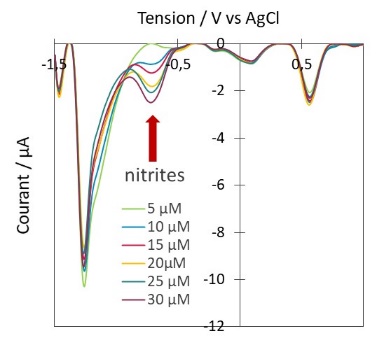
The method was validated on hundreds of urine samples in biological testing laboratories and in hospitals in partnership with Usense. The detection of nitrites in urine is very selective, with a threshold of around 0.5 micromolar.
Diamond, with its unique physico-chemical properties, hasn’t lost its sparkle, bringing new capabilities to a medical use case with strong potential to impact society.