

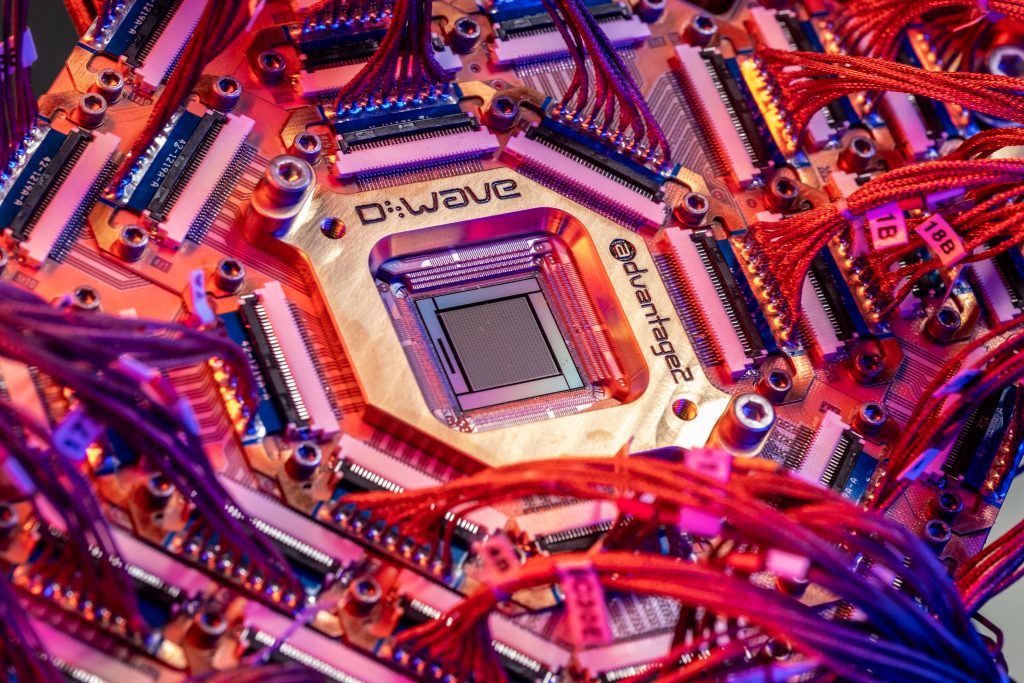
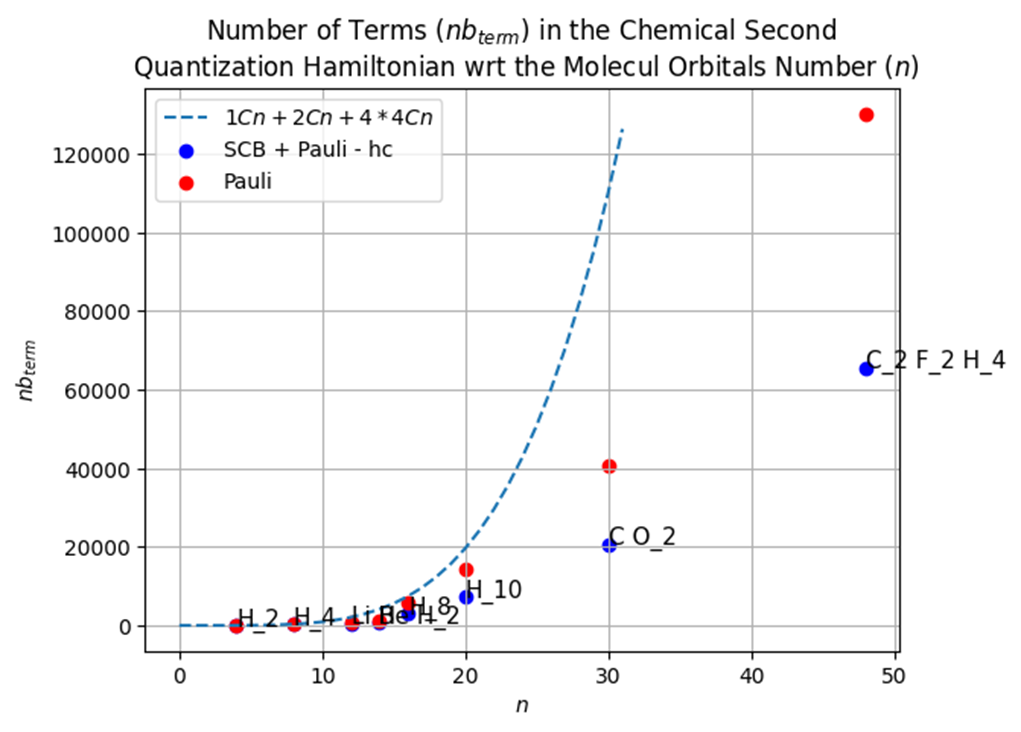
For QPUs to speed up computing, the problems of interest must first be converted into a series of instructions, or queries, that can be processed by the QPU. For many applications, formatting problems as queries is a bottleneck that can reduce and, in some cases, cancel out any increase in speed. Our laboratory is investigating strategies to prepare and use data for computing on QPUs that would overcome this bottleneck. Our research recently led to two publications:
1. For gate-based QPUs: The query takes the form of a matrix (which must be expressed as a product of the smallest possible number of elementary quantum gates) of the problem’s data. Here, we focused on finding the most efficient way to break down application-specific matrices. One of the articles presented this year[1] at IPDPS proposed improvements to the implementations of a number of matrices. We also developed code to automate the techniques described in the article. A paper detailing this development has been submitted to APP.
2. For continuous-time QPUs (also referred to as analog QPUs or quantum simulators): These machines can handle any problem that can be reduced to a quadratic unconstrained binary optimization (QUBO) problem. Here, we proposed effective reductions for application-specific problems. This led to a new reduction for solving linear systems, which in turn led to a patent.
We are also investigating quantum optimization heuristics and how to benchmark them. Unlike benchmarks based on the quality of quantum operations, here, we are comparing the performance of quantum processors with that of other types of processors—a particularly relevant issue. We initially focused our benchmark on two technologies, chosen for their maturity, D-Wave’s quantum annealers (QA) and NEC’s quantum inspired vector annealing (VA) heuristic. We were thus able to compare the performance of quantum heuristics with each other and with classical heuristics. This benchmark, the first to compare the heuristic performance of QA and VA on a constrained problem, was presented[2] at QCE.
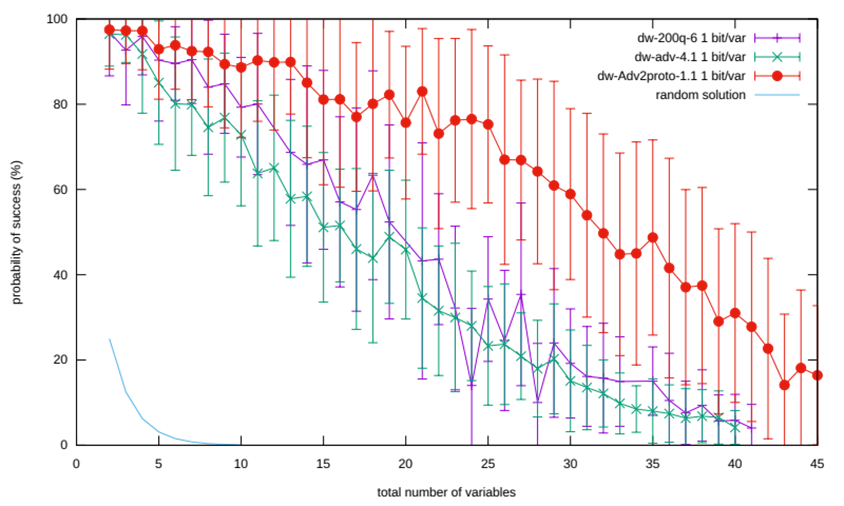
Although quantum computers (QPUs) are still at a low TRL, early benchmarks show that significant progress is being made from one generation of QPU to the next.
BACQ for Quantum Computer Benchmarking: If you cannot measure it, you cannot improve it (Lord Kelvin)